Showing posts with label Universal Horror. Show all posts

Wednesday, October 10, 2012

Chapter Forty Five: "Theatre of Blood: A Basic Guide to the History of Horror in Film. Part II."


With “Dracula” and “Frankenstein,” icons and franchises had been created that would remain in American cinema and pop culture to this day. The term “horror film” was now being used in the press to describe such movies, Universal was the studio that was deemed the king of the genre, and Lugosi and Karloff were stars. Universal followed its hits up throughout the decade with an all-star cast of monsters, popular sequels and roles that forever typecast Lugosi and Karloff, often teaming the two, including “The Mummy” (1932); “Murders in the Rue Morgue” (1932); “The Old Dark House” (1932); “The Black Cat” (1934); “The Raven” (1935); “Werewolf of London” (1935); “The  Bride of Frankenstein” (1935); and “Son of Frankenstein” (1939). 

1935's Werewolf of London was the fifth werewolf film ever made, preceded by The Werewolf (1913), Le Loup-Garou (1923), Wolf Blood (1925) and another Le Loup-Garou (1932).


The Black Cat was one of the first horror films to feature a full-length soundtrack.


The other studios saw the potential and immediately began following in Universal’s footsteps. Paramount chose to update the filmic version of “The Strange Case of Dr. Jekyll and Mr. Hyde” (1931) and earned the first Oscar for a horror for Fredric March’s performance, as well as advancing transformation special effects. United Artists began the trend of zombies in the movies with Lugosi starring in “White Zombie” (1933). Browning frightened audiences and MGM with “Freaks” (1932), causing 30 minutes of the film to be cut to calm censors. And while the 1930s ended on with audiences dissipating and films taking a more horror-comedy slant, some of the greatest in the genre were still produced during that one decade, including “The Invisible Man” (1933); “Mystery of the Wax Museum” (1933); “The Most Dangerous Game” (1932); “Island of Lost Souls” (1933); “Mad Love” (1935); “Mark of the Vampire” (1935); and the biggest monster of all time, “King Kong” (1933), which brought renowned and influential stop-motion special effects by Willis O’Brien.

1933's Island of Lost Souls featured Kathleen Burke, a former dental assistant who won a nationwide talent contest to cast as "The Panther Woman."


While the 1930s produced some of the greatest and most inventive horror films ever created, the 1940s saw a marked decline in originality. The major studios found themselves depending mostly on the formulas that had worked during the prior decade, and with the dawn of World War II, audiences craved easy-to-digest popcorn fare. Universal began the decade with a classic in “The Wolf Man” (1941), casting Lon Chaney, Jr., into the field his father had helped define, but mostly continued to rely on the success of its original monsters, producing mostly thin sequels such as “The Invisible Man Returns” (1940), “House of Dracula” (1946), “Frankenstein Meets the Wolf Man,” and eventually parodies such as “Abbot and Costello Meet Frankenstein” (1948), a comedy that cast a desperate Lugosi as the monster. Although the first horror shot in color had been 1932’s “Doctor X,” horror in color did not become a hit until 1943 with the release of the newest version of “The Phantom of the Opera.”

Lon Chaney, Jr., in 1941's The Wolf Man.


Though most of the major studios were scrambling to produce formulaic and cheaply made films that would sell, it was RKO-Radio Pictures that brought a sense of experimentation back into American horror. RKO was the smallest of the majors, and hired story editor Val Lewton to also produce quickly made horrors on a small budget, often only giving him the title of a film that would sell based on marketing research as a starting point. Lewton decided to bring his own sense of suspense to the genre, calling them “chillers,” setting them outside of the Gothic time period and instead bringing them into the modern world. Such films as “Cat People” (1942), “I Walked with a Zombie” (1943) and “Isle of the Dead” (1945) brought respect to the existence of low-budget films (or B-movies). Lewton's imaginative use of shadows and sound also created what became known as the "Lewton Bus," a screen trick that startles the audience through a set-up of suspense that is capped by a harmless occurrence. 


The production of horror films overseas had slowed. Entries from Mexican by director RenĂ© Cardona (“El espectro de la novia/Spectre of the Bride” (1943)) were notable. Japan laid the grounds for its genre the kai-dan eiga (“ghost story”) with Keisuke Kinoshita (“Shinshaku Yotsuya kaidan”/”The Ghost of Yotsuya – New Version” (1949).


 To be continued...


This history would not be possible without help from the following sources, which I recommend to any horror fans:

archive.org
Carroll, Noel. "Why Horror?" In Mark Jancovich (ed.) In Focus: Horror, the Film Reader. (Routledge 2002).
frankensteinia.blogspot.com
godzilla.wikia.com
guidetohorrorfilms.blogspot.com
horrorfilmhistory.com
Jones, Alan. The Rough Guide to Horror Movies. (Rough Guides 2005)
midnightmedia.blogspot.com
Muir, John Kenneth. Horror Films of the 1970s. (McFarland and Company, Inc. 2002)
Todorov, Tzvetan. "Definition of the Fantastic." In Ken Gelder (ed.) The Horror Reader. (Routledge 2000).
sickopsychotic.blogspot.com
Viera, Mark A. Hollywood Horror: From Gothic to Cosmic. (Harry N. Abrams, Inc. 2003)
wikipedia.com
Wood, Robin. "The American Nightmare: Horror in the 70s." In Mark Jancovich (ed.) In Focus: Horror, the Film Reader. (Routledge 2002).

Monday, October 1, 2012

Chapter Forty Three: "Theatre of Blood: A Basic Guide to the History of Horror in Film. Part I."


I guess I'd like to begin with an editor's note, which is always an exciting way to begin an essay. The word essay itself leans toward drooling excitement anyways. Or maybe this is an Introduction, capital I, which sounds more respectful and formal. I proposed this essay for the ProQuest Discovery Guide series as a follow-up to my article "Moving Pictures: A History of Early Cinema" published there in 2011. The Discovery Guide series presents a basic 101 guide to specific topics. After finding myself knee-deep in research on the history of horror in cinema, I found out the series was to be canceled in August 2012. I decided to continue down the path and finish the article and present it here in several parts as a series unto itself. These articles are fenced by length parameters, and are not necessarily intended to examine the topics with intense detail, but rather give an overview of the subject matter. Once I learned I would be presenting this here on American Gloam, those parameters were negated. However, while indulging slightly more in depth I would not have been able to dig towards before, I still kept the essay moderately shortened. I would love to write a book about horror, or very specific aspects of horror films, but time and money don't allow me that option. Therefore, this essay presents a very broad-stroke view of the history of horror in film, and not a complete  itemized dissection of every aspect of the genre. Many other blogs, websites, articles and books go into further detail on this subject, and I'll list them throughout this series for anyone interested in reading more far-reaching research. With that said, the moon was full this weekend and in 30 days, the best holiday all year happens...   


I.                    Origins of Horror.

The Unknown has driven the arts since the beginning. In fact, the fascination with and the fear of the Unknown permeates almost all cultures. This can be constituted through the fear of death by uncontrollable forces or the sense of awe that can be coupled with unknown power beyond the grasp of the earthly, or in most cases, human world. Mythologies and religions are both shaped by the Unknown, whether in praise or fear of its existence. The idea of supernatural forces visiting the world of humans, often in dangerous and violent ways, and the struggle of humans against these forces that are larger than themselves, has driven oral legends, influencing the beginnings of literature, which in turn, influenced the beginnings of film. The idea of the fantastic Unknown is “in a world which is indeed our world, a world without devils, sylphides or vampires, [in which] there occurs an event which cannot be explained by the laws of this same familiar world” (Horror Reader, Todorov 14). Often, these supernatural forms appear in the physical sense as monsters, and humans struggle to survive their appearance on this plane of existence. 

Monsters invade humanity in the Babylonian “Epic of Gilgamesh” (c. 2000 BC) and Homer’s “Odyssey” (c. 800 BC) and appear in most religious tomes, including Christianity’s The Bible, which threatened Man’s sinful nature through the works of evil spirits, characterized by The Devil. Dante explored this fear further in his “The Divine Comedy” (1310), depicting the terrors found within the several levels of Hell.  The Middle Ages and Renaissance periods saw horrific depictions of The Last Judgment, as well as the appearance of werewolves. From this time period also emerged the legend of Faust, an actual necromancer whose exploits would later feed stories of his soul being sold to the Devil, a template that would influence horror for the rest of time, beginning with Christopher Marlowe’s “The Tragicall History of Doctor Faustus” (1590). 


Horror as a recognizable literary genre is often credited to have been birthed in the Age of Enlightenment as a reaction to the science and reason that flourished as a means to banish superstitions. Artists and writers explored the dark areas of imagination during this time period. Horace Walpole’s relation of one of his nightmares in “The Castle of Otranto” (1764) is considered to be the first British horror novel, spawning Gothic fiction. Ghosts and demons began to sell more books, leading Mary Shelley to pen her own ghost story in 1818: “Frankenstein; Or, the Modern Prometheus.” Horror as a genre was popular culture, and film drew from that popular culture in order to sell, as well.


The development of the motion picture can become a controversial argument that swerves both into copyright issues and various claims by various inventers. The popular accepted history is Edison invented the technology and Louis and Auguste Lumière introduced audiences to the big screen in 1895 by showing a number of shorts in Paris. As much as the details of the debut of film are debated, the debut of the horror film can also be argued. While some literature advances that the genre of the horror film did not take shape until 1915 with Paul Wegener’s “The Golem,” the techniques, imagery, and ideas of creating scary circumstances on film began much earlier. As film began to creep into the popular consciousness of paying audiences, Georges MĂ©liès, a magician-turned-filmmaker, immediately began experimenting with special effects and devilish imagery. By stopping and restarting the camera, MĂ©liès was able to create the effect of skeletons and demons appearing and disappearing from the screen, captivating audiences with his film, “Le manoir du diable (The Haunted Castle)” which debuted in 1896. 


 It is here that the semantics and definitions of what is defined as “horror” as a proper genre become debated. Often, MĂ©liès’ films are noted for being inspirational for both the horror and science fiction genres, and in academic histories, are described as “fantastic films.” The idea of what constitutes a true horror film can become divided into the sub-genres and the narrative paths used. This divide also stretches back into the analysis of what constitutes the differences between “fantasy” and “horror” in literature. The two genres overlap, especially in the case of a definition of horror; a fantastical element is usually introduced that causes pause to the reader, viewing audience, and protagonist of the story (Horror Reader, Todorov, 19). This introduction of an uncanny event into the normality of reality can create the scenario used by many genres in film, whether it is fantasy, adventure, or horror, depending on the plot or type of uncanny or unrealistic action that is introduced. 
 
Like all motion picture genres, horror began with the introduction into our world of the “normal” with the appearance of skeletons and demons in the early works of MĂ©liès, and from there developed (and continues to develop) into various incarnations. While a motion picture that introduces an element of crime or violence into the narrative of the familiar can be considered fear inducing, horror often takes its cues from the supernatural; bringing an uncanny and uncontrollable evil into the physical world. A simplified definition of the horror film genre might be summed up with a basic formula: “normality is threatened by the Monster.” The identification of the Monster can change drastically, representing anything from demons to skeletons to basic fears in society (In Focus, Wood, 31). And as time progresses, the uncanny elements of horror films, or the Monsters, have transformed considerably. The Monster has existed in such varied forms as actual supernatural beings or lumbering beasts, terror that has come from the subconscious from within humans, out-of-control science, and extraterrestrial threats. Regardless of the actual threat in the film, the presence of curiosity to engage the audience in either proving, or disproving, the Monster, leading to an interaction with the fear of the unknown, drives the horror film (In Focus, Carroll 35).  

Still from Alice Guy's "Esmeralda." 1905.
Film exploded as a popular form of entertainment very quickly, and within 10 years, the medium itself immediately began experimenting and changing. Studios formed and took note that audiences craved movies that had more fully realized storylines. Horror followed suit, again mining from classic literature, bringing stories that were already in the public eye to the big screen. In 1906, Alice Guy directed “Esmeralda,” an adaptation of Victor Hugo’s “Notre-Dame de Paris” (1831). Guy’s film is noted for creating a more sophisticated template for the horror film and brought to motion pictures possibly the first Monster to become a recognizable star: Quasimodo. The plot of Hugo’s book would inspire many other filmmakers in the first decade of the 1900s, and would lead to another first for the genre: the first full-length horror film, the French triptych “Notre-Dame de Paris” (1911). 

Meanwhile, Spanish filmmaker Segundo de Chomon began producing some creepy material, as well, including "The Red Spectre" (1907) and "The Haunted House" (1908).


 The Monsters began making their onscreen debuts at a drastic rate during the 1900s and 1910s, and many of them would go on to be recast as the biggest movie characters ever created. This period saw the first versions of “Dr. Jekyll and Mr. Hyde” (1908), “Frankenstein” (1910), “The Vengeance of Egypt” (the Mummy) (1912), and “The Werewolf” (1913). The stories of Edgar Allan Poe provided material for several filmmakers, and eventually resulted in what is regarded as the first horror film hit (and some say the first horror masterpiece), D. W. Griffith’s “The Avenging Conscience” (1914), based on the short story “The Tell-Tale Heart.”


It was at this time that German Expressionism seized upon the creepy images that could be offered in the genre of horror and created some of the most widely regarded horror films ever made, leading to Paul Wegener’s monstrous “The Golem” (1915), Robert Wiene’s nightmarish “The Cabinet of Dr. Caligari” (1919) and F. W. Murnau’s creation of the motion picture vampire template with “Nosferatu” (1921) (a film illegally based on Bram Stoker’s novel “Dracula,” and one that had led Stoker’s widow Florence into legal battle to suppress it). 


Still from "Nosferatu." 1921.

 The imagery rendered in these films earned horror not only more fans, but artistic respect, and separated the styles between European and American horror, wherein the former concerned itself with dark artistry and themes, and the latter dwelled on thrills and the advent of star power among its actors.

The first horror film movie star was undoubtedly Lon Chaney. Chaney had already earned himself a career as “The Man of a Thousand Faces” based on his skills with makeup to transform into numerous characters onscreen since his debut in 1912. It was at Universal Pictures that Chaney was noticed by the young manager of production, Irving Thalberg, who introduced the actor to upcoming director Tod Browning. In 1923, the trio united to create the most successful horror film to date, a big budget version of “The Hunchback of Notre Dame.” This film cemented Universal as the center-point of feature-length monster films, and made the Monster a Hollywood and cultural icon. 


Chaney’s success at scares continued with “The Phantom of the Opera” (1925). The twenties saw the horror film continue, although fright in film began to give way to a series of American spoof-shockers, such as Paul Leni’s “The Cat and the Canary” (1927). Chaney and Browning collaborated on the first Hollywood vampire film, “London After Midnight” in 1927. Despite its success, times were about to change in America and Hollywood.

In 1928, talkies debuted with the film “The Jazz Singer,” sending all of Hollywood into a scramble to begin uniting sound with its pictures. The first all-talking horror film was Roy Del Ruth’s “The Terror” (1928), although it fell to poor reviews due to its stagy and stiff acting. 


As the Great Depression fell across the United States, Universal decided to lure audiences back to the theaters with an ambitious horror film with full sound.  It was assumed it would reunite Chaney and Browning, however, Chaney’s failing health and eventual death in 1930 due to cancer nearly stopped the project. Through much infighting at Universal, and difficult, diplomatic negotiations with Florence Stoker, Browning was given the green light to direct “Dracula.” Its star was the actor who had played the title role in the theatrical version, Bela Lugosi, who was decided on partially due to his experience, and partially due to how cheaply he would work.


While other films before it had provided templates and definite influence (Universal suppressed “Nosferatu” by buying the print and giving it to Browning to study), “Dracula” itself provided a template for the big budget Hollywood blockbuster monster movies of the 1930s and beyond. Universal was amazed at the 50,000 tickets sold in two days in February 1931, and the path seemed immediately clear: audiences wanted fog, scary castles, monsters, and gothic imagery and melodrama. The hit premiere of James Whale’s “Frankenstein,” starring former bit part player Boris Karloff, in December of the same year, was the nail in the coffin, so to speak. Horror was here to stay. 


To be continued...


This history would not be possible without help from the following sources, which I recommend to any horror fans:

archive.org
Carroll, Noel. "Why Horror?" In Mark Jancovich (ed.) In Focus: Horror, the Film Reader. (Routledge 2002).
frankensteinia.blogspot.com
godzilla.wikia.com
guidetohorrorfilms.blogspot.com
horrorfilmhistory.com
Jones, Alan. The Rough Guide to Horror Movies. (Rough Guides 2005)
midnightmedia.blogspot.com
Muir, John Kenneth. Horror Films of the 1970s. (McFarland and Company, Inc. 2002)
Todorov, Tzvetan. "Definition of the Fantastic." In Ken Gelder (ed.) The Horror Reader. (Routledge 2000).
sickopsychotic.blogspot.com
Viera, Mark A. Hollywood Horror: From Gothic to Cosmic. (Harry N. Abrams, Inc. 2003)
wikipedia.com
Wood, Robin. "The American Nightmare: Horror in the 70s." In Mark Jancovich (ed.) In Focus: Horror, the Film Reader. (Routledge 2002).

Wednesday, October 5, 2011

Chapter Twelve: "The House of Horrors Became the House of Horrors: Fright Fest 2011, Part I - 'Murders in the Zoo'/'House of Horrors.'"


That’s a confusing title, but I’m rolling with it.

It’s clichĂ© as everything that can be clichĂ© in the world, but I rarely watch horror films during any other part of the year other than October. Halloween is my favorite holiday – the only holiday, really. As soon as the wind turns wind-breaker cool and the nights become slightly longer giving into a penchant for red wine and stews, I immediately think about Halloween. I think as a child, my Mom and Pa reveled in my addiction to Christmas, but somewhere along the line my soul left me, heeding a call from the Pagans, and here I sit, a Halloween fan long in the tooth. As far as I’m concerned, the rest of the “holidays” can take a leap, including you, Christmas. (Well, except for cheesy Xmas-time music, which I do enjoy far more than a sane person should, but that’s a story for another day).

My anchoring of horror movies to October has nothing to do with disrespecting the genre, or not admiring it. Some of my favorite films are horror. However, at some point in my life I definitely left the genre behind. The fact is, I have become somewhat picky about horror films. Much like Blues Music, I have certain parameters that need to be met for me to really enjoy a horror film. And much like Blues Music, the older and creepier, the better for me. I think my softening on horror films began somewhere in my teen years, and I know one aspect of the genre that empowered my lack of interest was that I rarely got scared by them. Once my mind wrapped around the fact that Satan was not actually waiting for me in my bedroom, the thrill was gone, my courage upped, and well…horror films got boring.

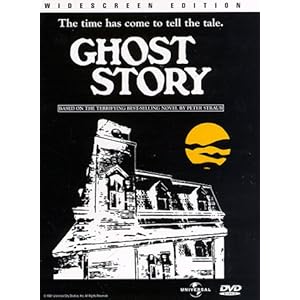
It’s actually strange to me that, of all the films I love, I did not consider horror a genre I cared much for; my Mother seemed to obsess over them as I was growing up. No matter the time of year, when we made a trip to the video store, my Mother seemed to lean toward a scary VHS above all else. Due to my Mother’s exquisite abilities at Avon sales, she was awarded an early VCR near the dawn of the 1980s. Besides “9 to 5,” the first films I remember her recording off of a new channel called HBO were “Ghost Story” and “Poltergeist.” And, well, when I finally snuck and watched them with my Brother, those films scared Hell out of me and probably damaged me a bit.


And then there was “The Exorcist.” I don’t remember the first time I watched it, but like most kids my age who viewed this monstrosity on tape, I stayed awake for approximately 30 days protecting myself from possession. Raised Catholic, the threat of Satan was a real thing to me, and it ate into me far more than it should have. I have real issues to this day with that film, which I consider the only horror movie that really needs to exist. It remains the pinnacle of fear in my life, having branded a creepy feeling that we are not safe sitting in our living rooms, drinking quarts of butter with small amounts of popcorn to help us digest it.

We watched other horrors together as a family: the early “Nightmare on ElmStreets” and “Friday the 13ths”. But nothing ever got me like Linda Blair’s gutter voice, or the priest hurling himself out the window.

And that might be where I parted with the horror genre. Horror seemed to become this genre that was about action and laughs; I could not take slasher films seriously, and most other possession films seemed to simply rip-off “The Exorcist” in their attempts to corner and take control of my soul.

Thus, my version of the overdone Fright Fest idea. Realizing how much I had ignored the genre, I vowed with a contract in blood and a Black Mass some ten years ago to catch up, re-study, immerse, and well, just plain give horror films their fair chance. Every year I cram as many as I can into the 31 days of my favorite month. And it has made me understand, to paraphrase Frank Sinatra, some gruesome and amazing things I have missed. From the beginnings of the genre back in the 1890s, to nostalgic meanderings in the 1970s and 1980s, to the newest material being cranked out.

So, as much of an introduction as that can be, I’ll try and review/consider/discuss/promote some of the films I bring myself to watch this October in the Year of the Golden Rabbit, 2011.

I begin with two from the Turner Classic Movies collection, “Universal Cult Horror Collection.”

I began October 1st with an early wintry wind and a friend sitting at a pond in Cave Hill Cemetery dodging attacks by murderous vampire ducks and swans. 


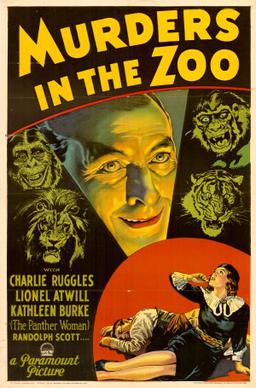
It seemed an apt start to the Halloween season. I ended the day at 1 AM with “Murders in the Zoo,” a movie that nearly swims near the surface I’d call HACK. But, it does have Lionel Atwill in it, so it can’t be discounted.

“Murders in the Zoo” is the oldest film in the collection, being released in 1933, the same year as “King Kong” and a year after “Freaks.” Horror had proven it could be a big seller two years earlier with the releases of “Dracula” and “Frankenstein,” so, much like today, studios were cranking out scary flicks left and right to capture that market.


Atwill was a common face in the horror films of the 1930s and 1940s. His most famous movies include “Mystery of the Wax Museum” and “Son of Frankenstein.” “Murders in the Zoo” features Atwill playing creepy millionaire zoologist/hunter Eric Gorman, who is as delusional as any mad scientist. Gorman’s madness gurgles from his complete obsession with his young wife Evelyn, played Kathleen Burke. Burke was a dental assistant-turned-actor known for her appearance as the Panther Woman in “The Island of Lost Souls,” the first film adaptation of HG Wells’ novel, “The Island of Dr. Moreau.”

Originally made by Paramount Studios and later sold to Universal, “Murders in the Zoo” was a pre-Hays code film, allowing for the gruesome opening scene to exist, and to later be edited during television showings during the 1950s. The opening sequence depicts Gorman working furiously over what is presumed to be an animal he has caught, but within minutes it is revealed to be a lover of his wife. Gorman has left the man to roam the island with his mouth sewn shut, making for a nightmarish image to start the movie.


Atwill’s portrayal of Gorman is plain sadistic as a psycho-murder who hunts big game but is simply obsessed with not just his wife, but anyone who makes eyes at her at all. The pre-code elements shine (or murk) through here and there, especially one scene when the twisted Gorman shakes Evelyn violently, threatening to hurt her. She responds coolly, “Oh, NOW you’re going to make love to me.”

There is also a very violent scene in which the captured big cats all attack each other in what could only be a real fight. I assume some amazing training was employed, but the scene looks a bit too realistic to think some of the animals weren’t actually hurt.

The studio found the film to be too dark and decided it needed to be a horror-comedy, bringing in the bumbling town-drunk character of Peter Yates, a PR man hired by the zoo to help promote the arrival of the new animals being shipped in by Gorman. While I don’t normally care for horror-comedy, Charlie Ruggles’ performance as the fumbling Yates is pretty priceless. Throughout the film he misspeaks as a good alcoholic should, and is scared senseless at any mention of lions, tigers or bears. 
 
Still, “Murders in the Zoo” becomes more of a thriller-comedy than anything else. It was directed by Edward Sutherland, one of the original Keystone Cops for Mack Sennett. It did make me an Atwill fan by the end. Like many pre-code films, it only ran a quick hour and five minutes.

Atwill about to poison an unassuming victim...well, she's starting to assume.


Leading me to flick two: “House of Horrors,” half of the inspiration of my title for this series of entries.

“House of Horrors” was directed by Jean Yarbrough, and was released on April 10, 1946 (my birthday! I remember it well…). Among many horror movies, Yarbrough also directed one of my favorite Lugosi films, “The Devil Bat” (1940), as well as an early werewolf talkie, “She-Wolf of London” (1946). By the time it was released, the golden age of Universal horror-monster movies was coming to a close.   


I will say straight-away that I enjoyed “House of Horrors” more than “Murders at the Zoo.” It presents itself as a bit more of a classic creepy film. The plot centers on struggling sculptor Marcel DeLange (Martin Kosleck) who is plagued by poor reviews in the NYC art scene. As he nearly commits suicide, he finds a drowning man in the river and saves him. The man (Rondo Hatton) becomes his muse, despite his reputation as a deformed killer of prostitutes known as The Creeper. Eventually, Marcel begins to use the Creeper to kill his detracting art critics. On his case are art critic Joan Medford (Virginia Grey), artist Steven Morrow (Robert Lowery) and Detective Larry Brooks (Bill Goodwin).

To me, immediately, I was reminded of the 1959 flick "A Bucket of Blood."

Part of my allure, partially, was watching Marcel complain to his cat while eating bread and cheese about the criticisms leveled at him by his art critics. The mad artist who finds art criticism to be such cutthroat business that he finds a way to strike back. Hey, who among us struggling artists haven’t felt that, right? Kidding. Don’t Von Trier me.


I enjoyed the sarcastic-flirtatious exchanges between Grey and Lowery. Her critic is aggressive and quick, while he’s the macho cheesecake sketcher who for the most part, seems to always be at a canvas while a model (with an almost see-through shirt…not sure how that escapes the Hays/Breen Code that was in full-swing at the time) poses with a tennis racket in front of him. Grey and Lowery’s dialogue reminds me of some of the best fast-paced noir exchanges between dames and dicks I’ve ever heard. “I have much to live for,” She says, out late to catch some scoop. “And you’re my biggest much.” Nice.

The Hays Code, known as the Breen Office at the time, did step in several times during the making of the film to make sure the Creeper did not look at the females with any sexual desire.

This brings me to the Creeper. This movie has a wonderful Halloween atmosphere. It’s dark; it’s got fog; and it’s fucking got Rondo Hatton as the Creeper. The Creeper was poised by Universal to become the next full-blown monster star and revive the monster/horror genre. If Hatton had lived, I believe it would have worked. This is my first true film exposure to Hatton’s Creeper character, but his image is one that I have seen used over and over throughout the years, putting him nearly on-par with the other iconic Universal Monsters.


Hatton was diagnosed with a disease known as acromegaly, which produces excess growth hormones, sever disfigurement and early death. It’s believed he contracted it from poisonous gas while he fought in World War I. Basically, he wore no makeup in his portrayal of his thuggish typecasts. He was a reporter in Florida when he was “discovered” and cast in the film “Hell Harbor” (1930).  He played the role of the Creeper in the 1944 film “The Pearl of Death” and another 1946 Universal film, “The Brute Man,” as well as several other minor roles similar to the Creeper in various films. He died months before either “The Brute Man” or “House of Horrors” was released in 1946.

The character, and Hatton’s likeness, seems to have permeated horror films throughout the rest of history, as far as I’m concerned. Hats off to Hatton, who seems to me, to be as iconic as Karloff in the realm of horror films and popular culture.


One more moment: one of my favorite images in “House of Horrors” is when the Creeper is off on his way to kill a prostitute. While walking down a NYC street, he passes a shop that has a huge sign advertising “Desks to Rent.” My question: was that a common business in the 1940s? Renting desks? Sign me up. I’ll take one.   


Next: The origin of the "the house of horrors became the house of horrors" title! And more scariness!


Sources:
Turner Movie Classics Vault Collection DVDs, “Universal Cult Horror Collection” (2009)